This isn't just a train ride. It's one of those journeys where you forget about your phone, because what's happening on the other side of the glass beats any screen.
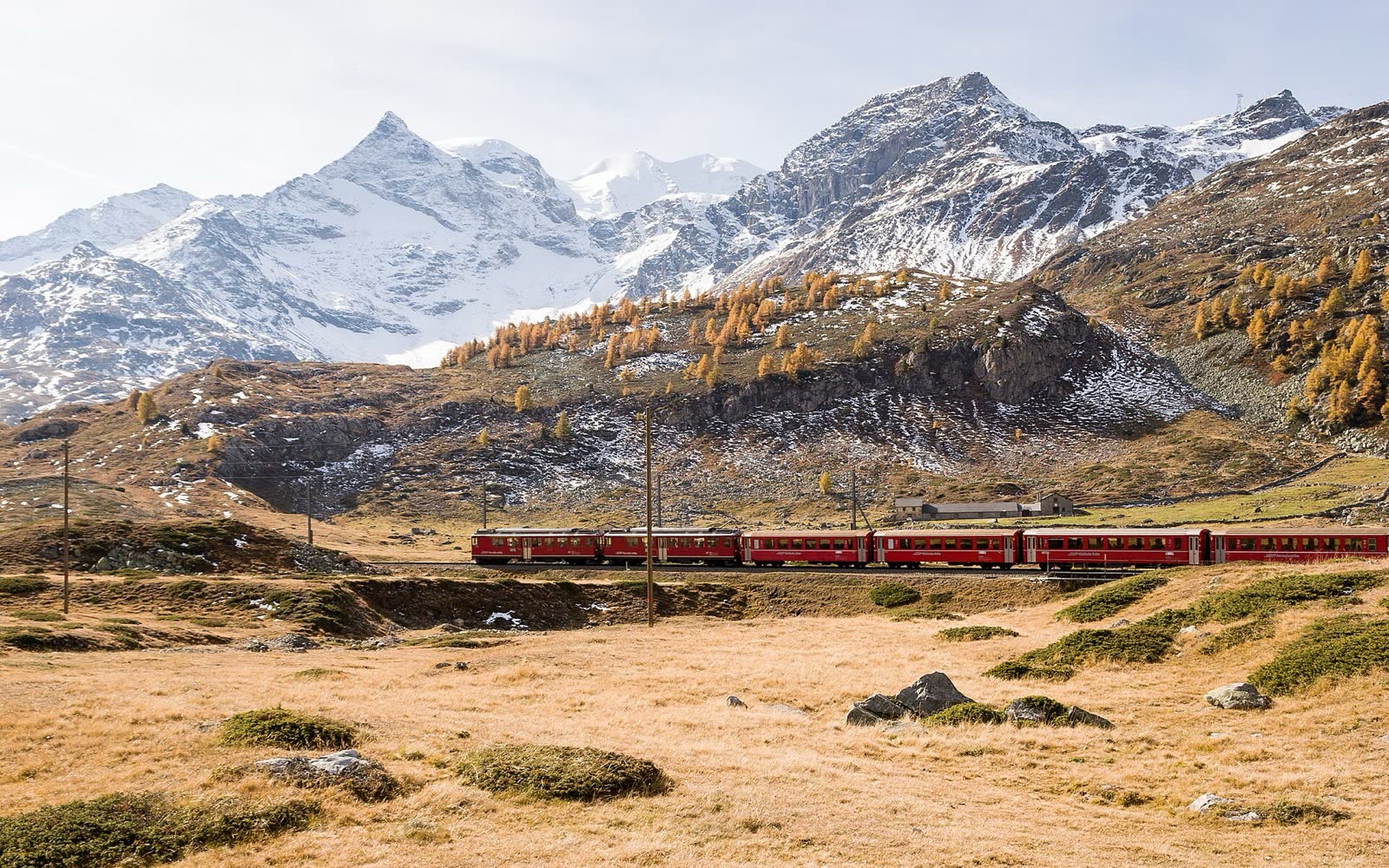
The Bernina Express links Tirano, a town in Italy's Valtellina, with Chur (or St. Moritz and Davos, depending on the train), in the Swiss canton of Graubünden. Along the way it climbs from 429 meters up to 2,253 meters at Ospizio Bernina with no rack rail at all, on adhesion alone, with gradients of up to 70 per mille. It loops around on itself on a spiral viaduct, skirts a white lake, passes right in front of a glacier and crosses the Landwasser Viaduct, the one on every Swiss postcard, before diving straight into a tunnel cut through the rock.
The Albula and Bernina lines have been a UNESCO World Heritage Site since 2008, and for good reason: this is early 20th-century engineering that still works every single day, in snow, in sun and with tourists glued to the windows.
From Turin, where I'm based, Tirano is a fast train to Milan plus a regional of about two and a half hours up the valley. In other words, it's a getaway you can fit into a weekend. But before you book, there are a couple of things worth knowing, because the ticketing system confuses almost everyone.
From Italy to the Alps, on one map
Tap any town to see what's there, or hit Ride the route and watch the train climb the mountain profile. The line is the real track alignment.
The five moments when you'll reach for your phone
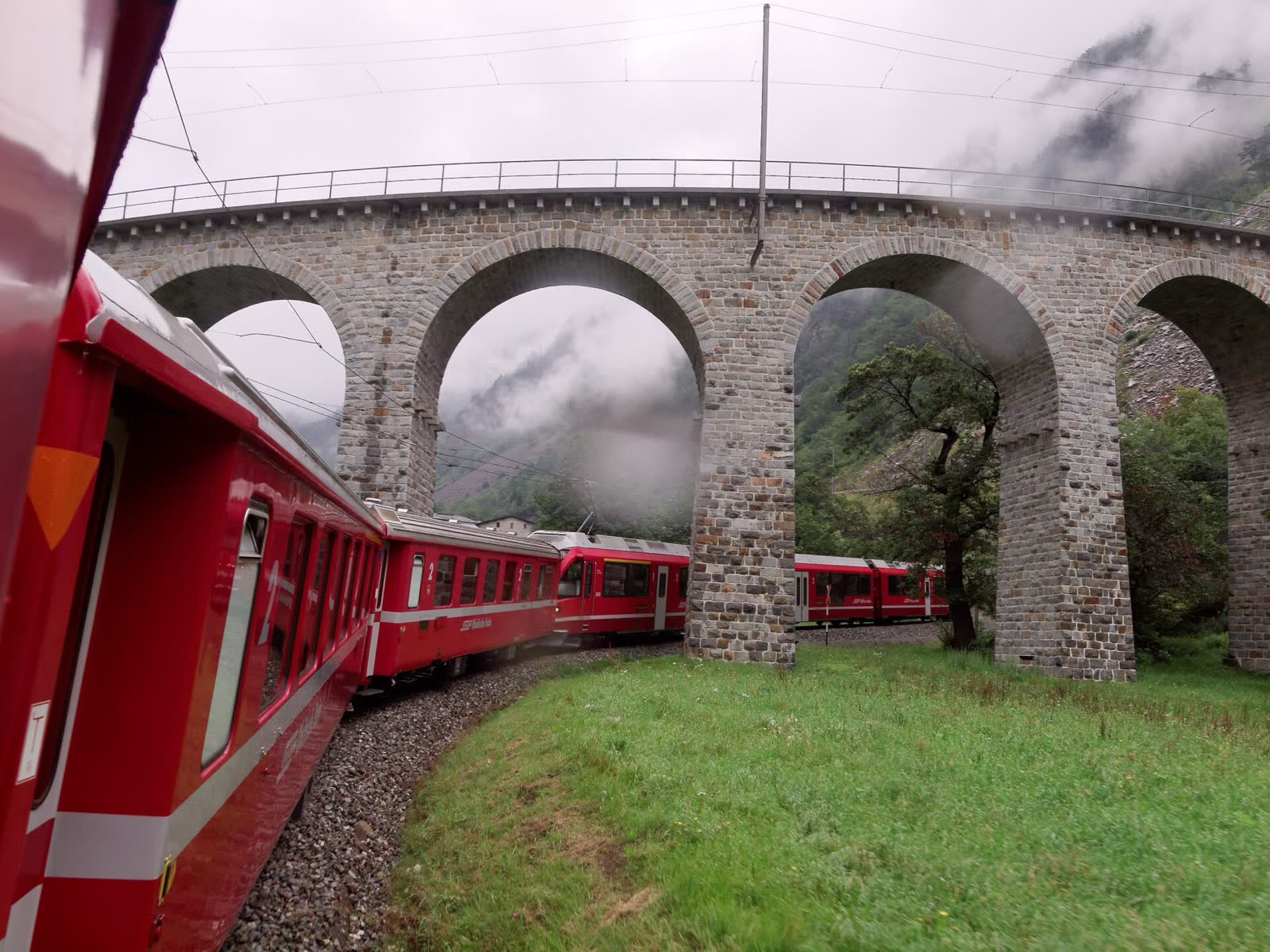
1. The Brusio spiral viaduct. A few minutes after leaving Tirano, the train makes a full circle of stone to gain height where there's no room to climb. From the rear cars you can watch the locomotive pass right beneath you.
2. Alp Grüm. The station perched above the Poschiavo valley, with the Palü glacier right in front of it. It's one of the few places on the route where the train makes a short stop, and people jump off and run to get the shot.
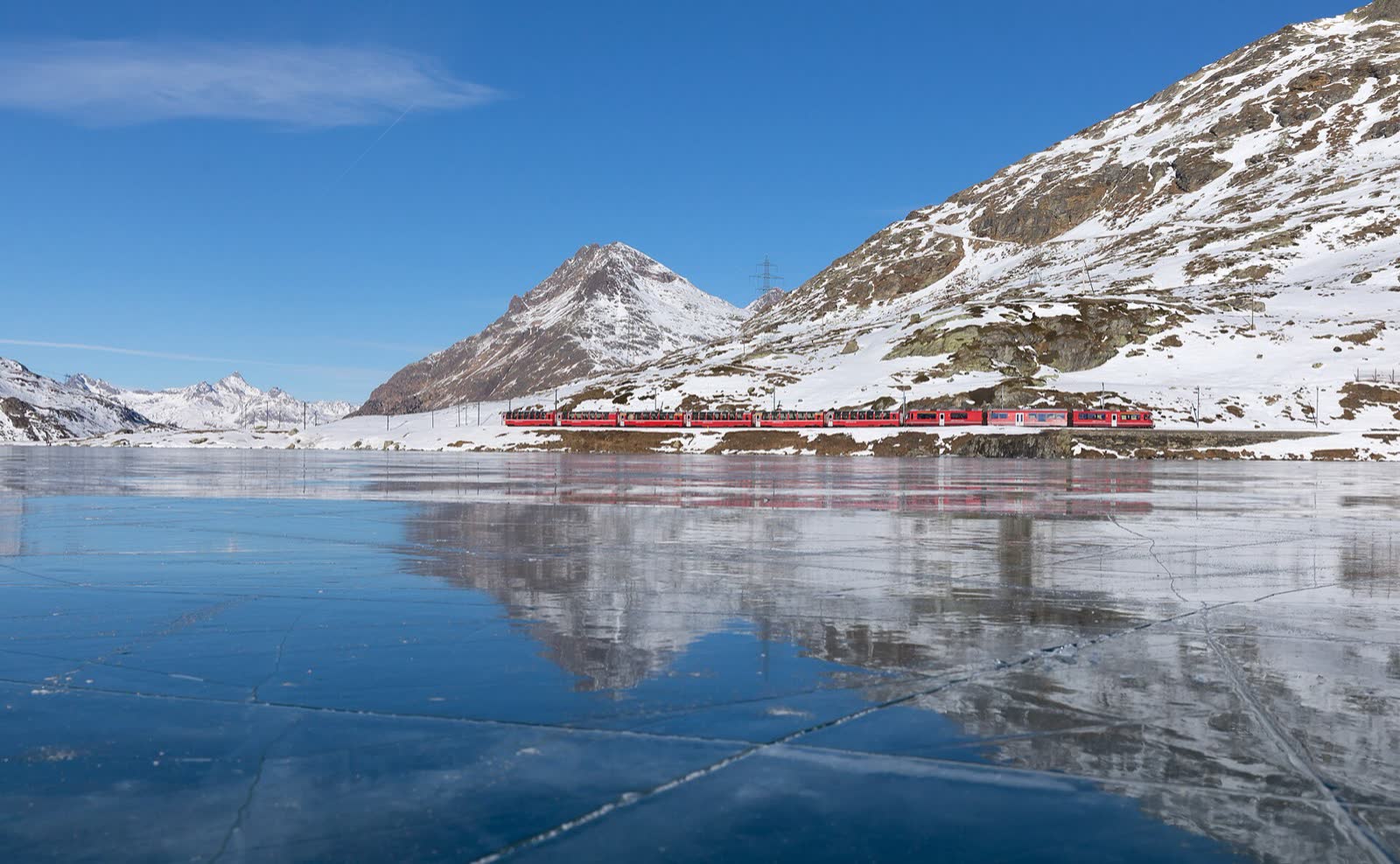
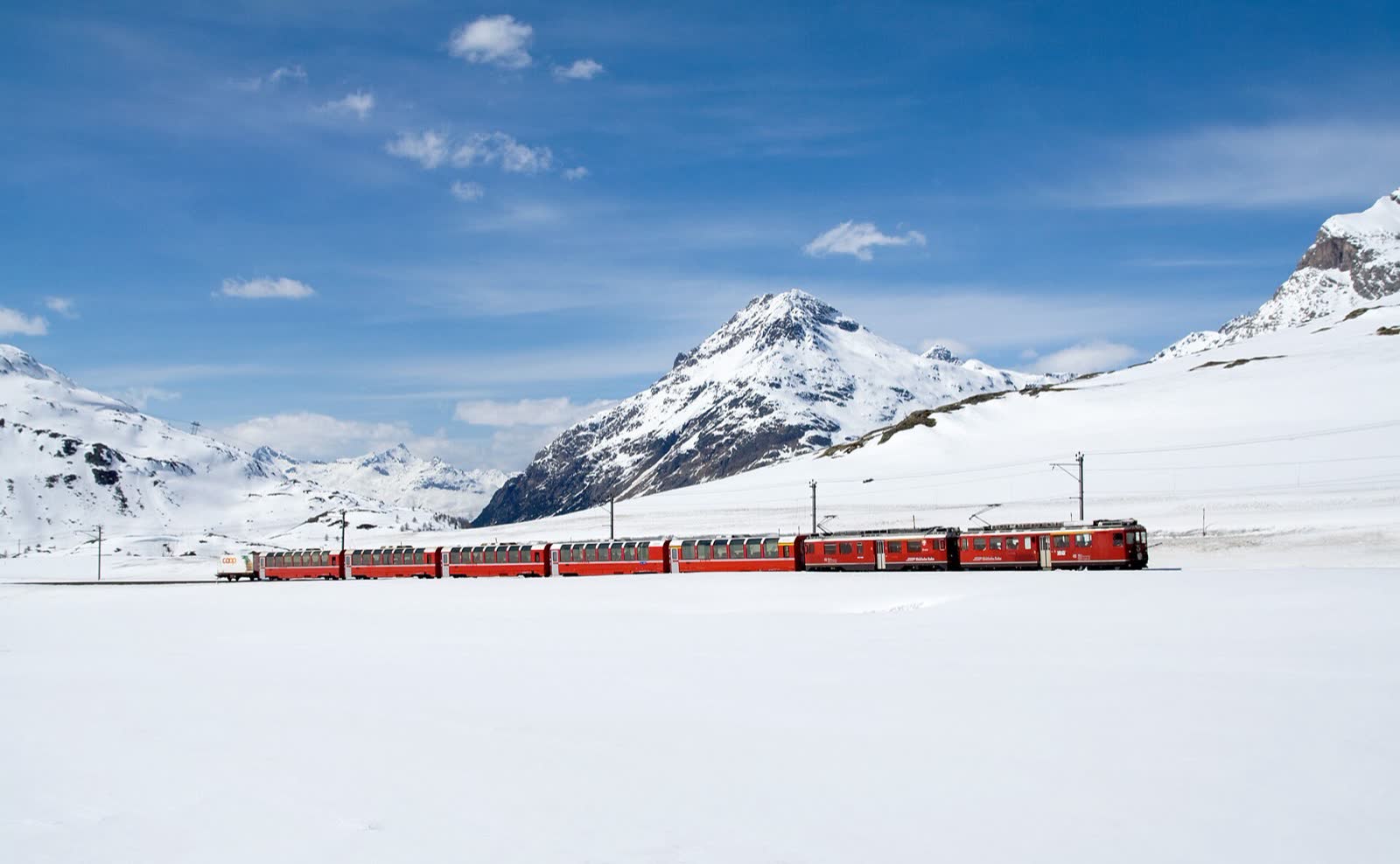
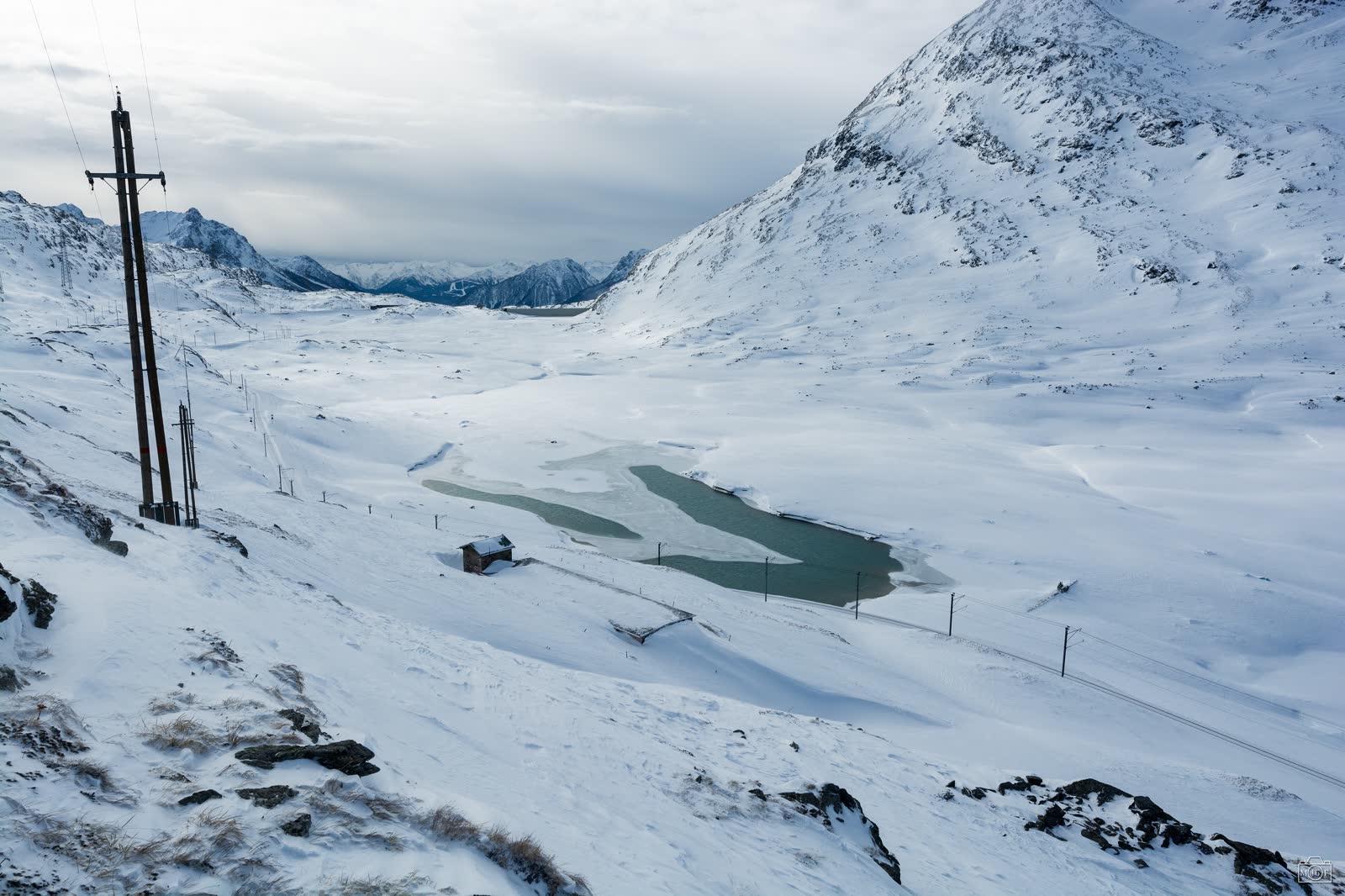
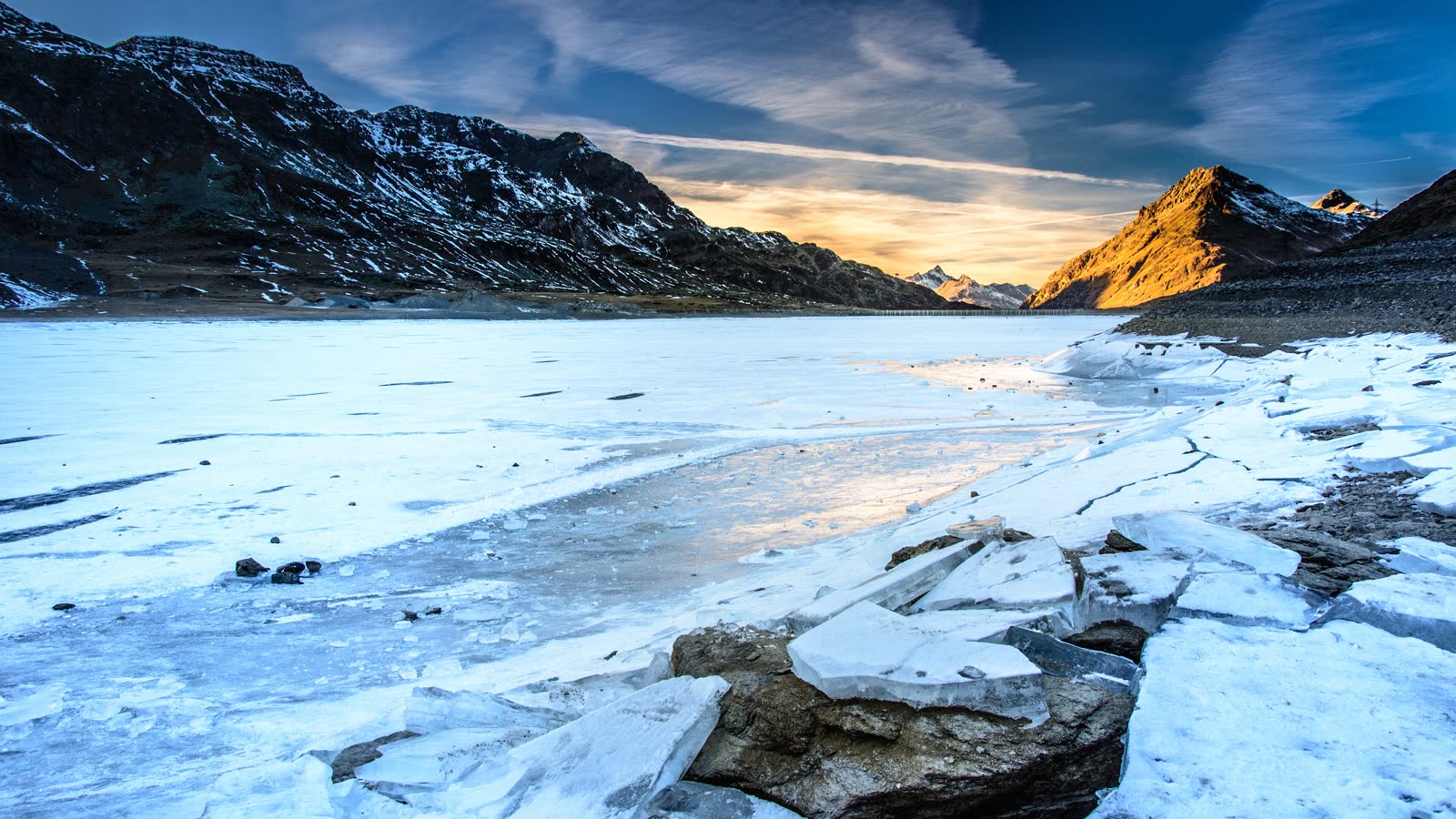
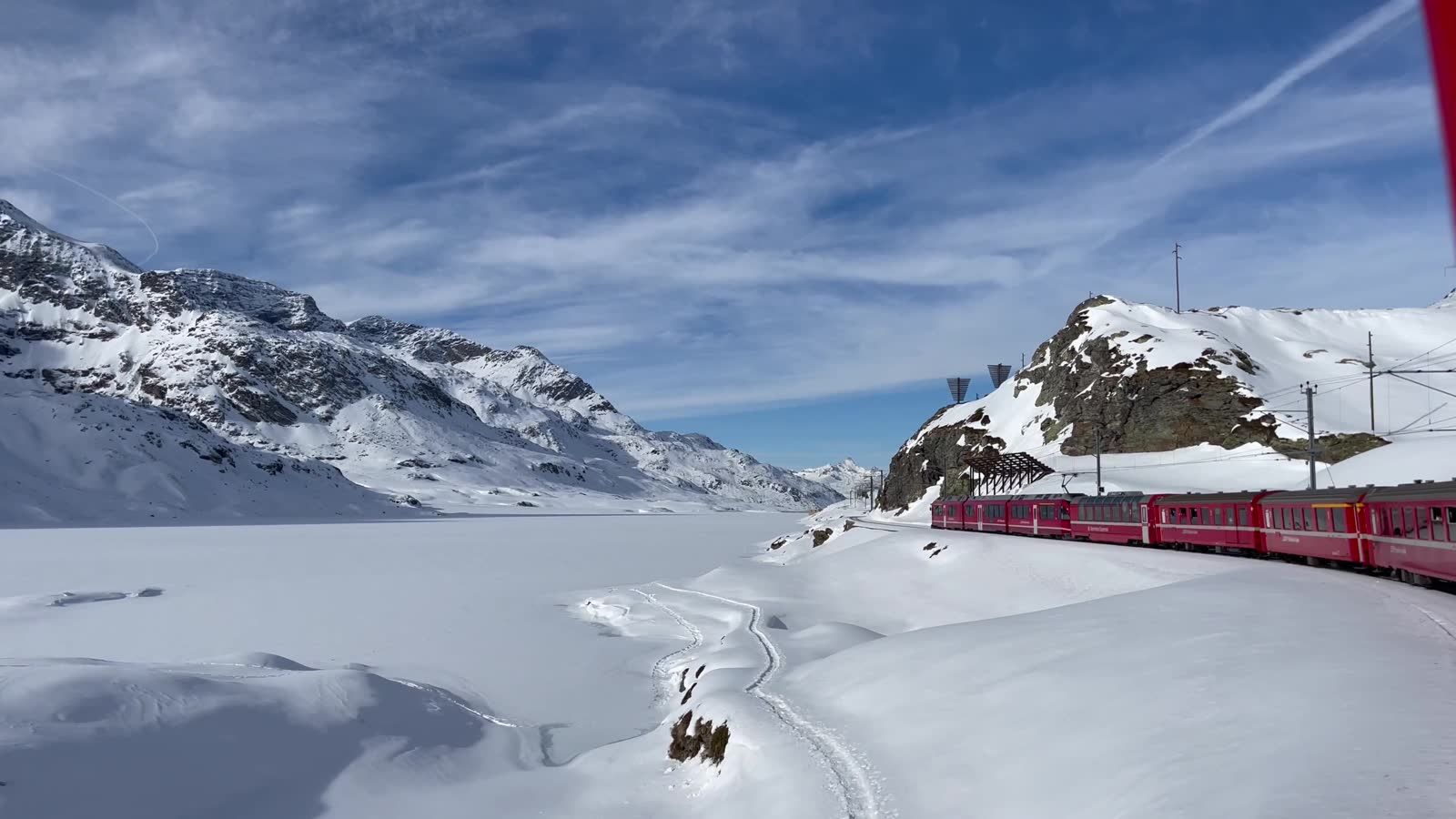
3. Lago Bianco and Ospizio Bernina. The highest point, at 2,253 meters. In summer the lake is a milky turquoise; in winter, a white plain where the red train looks like it was drawn on.
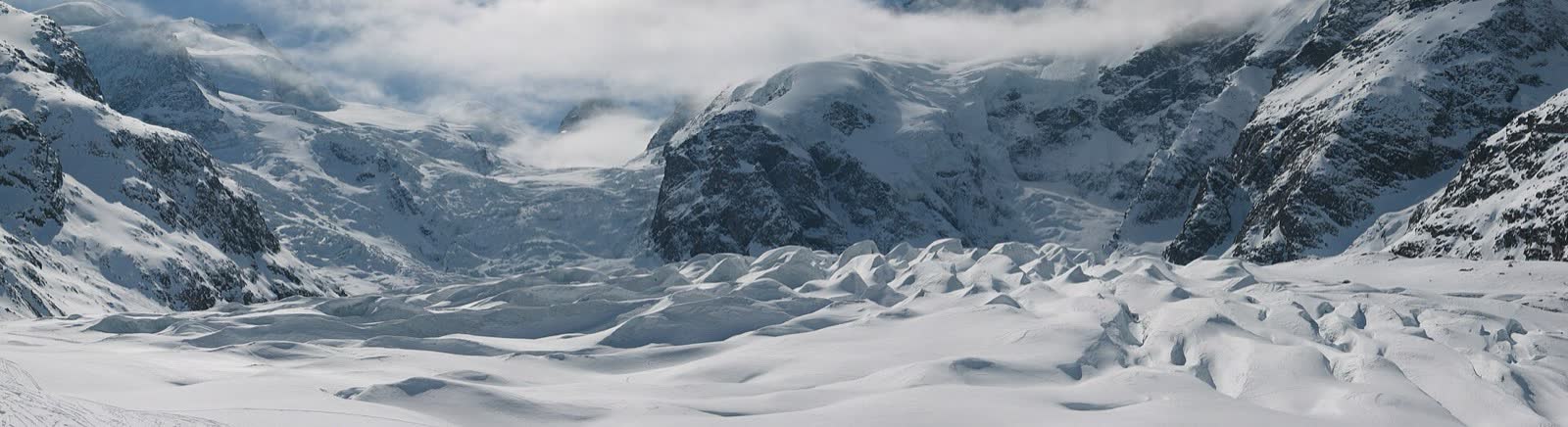
4. The Morteratsch glacier. It shows up suddenly around a bend, on the left as you head down toward Pontresina. A trail leaves from the station and shows how far the ice has retreated, with signs marking it year by year.
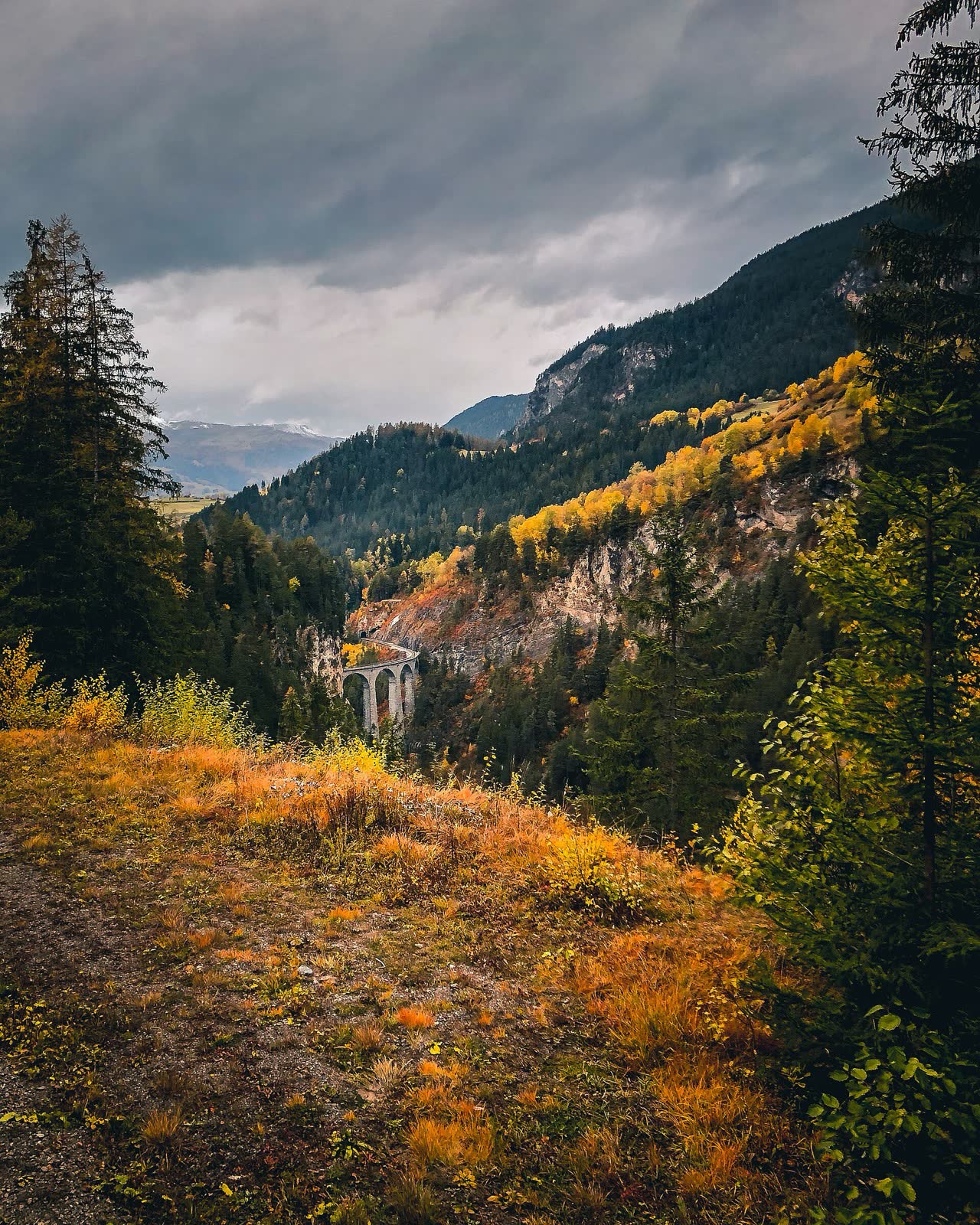
5. The Landwasser Viaduct. 65 meters high, six stone arches and a direct entrance into a tunnel in the rock wall. It's the end of the spectacular stretch and the photo everyone is after.
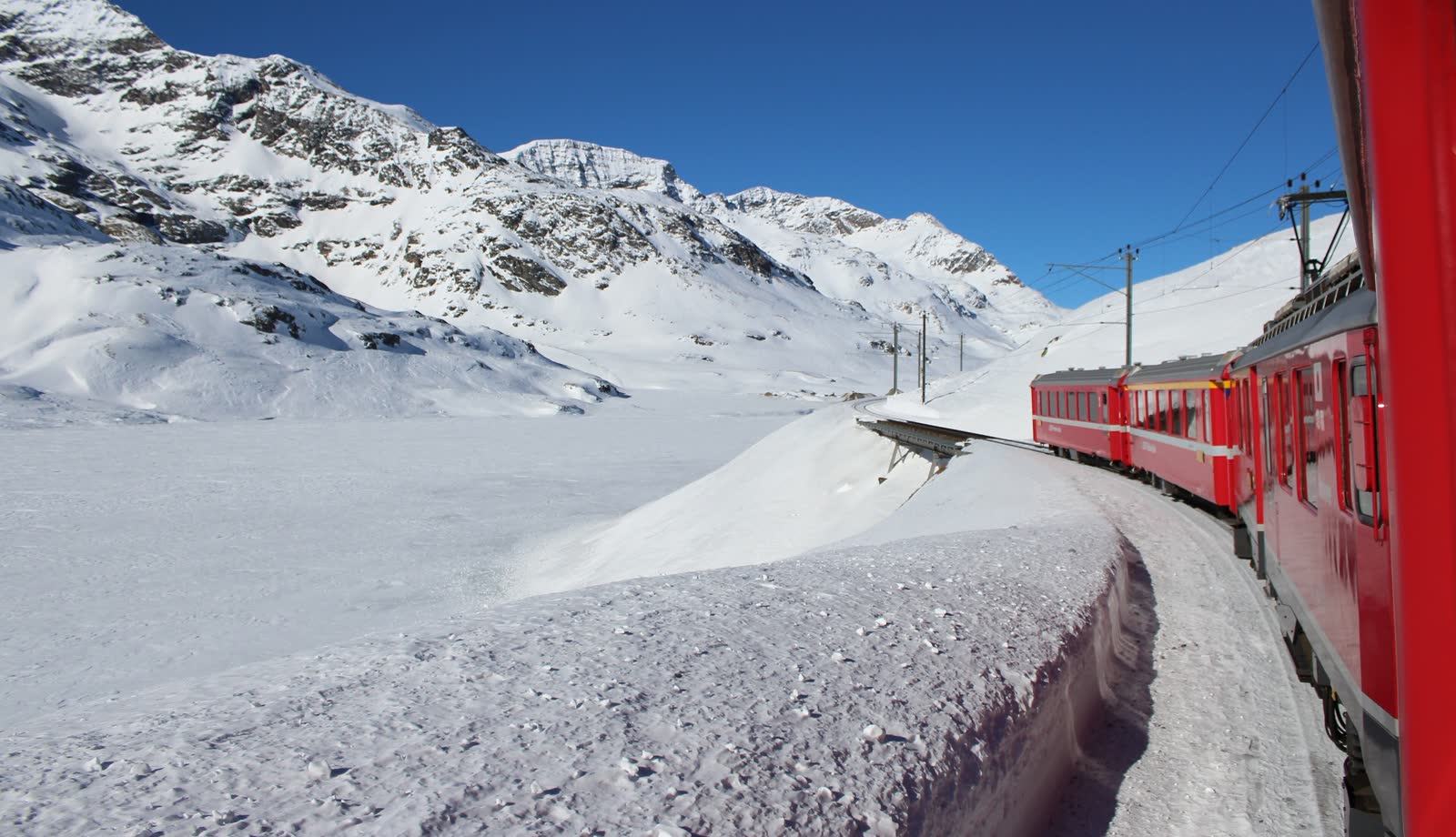
Crossing the Alps through the snow
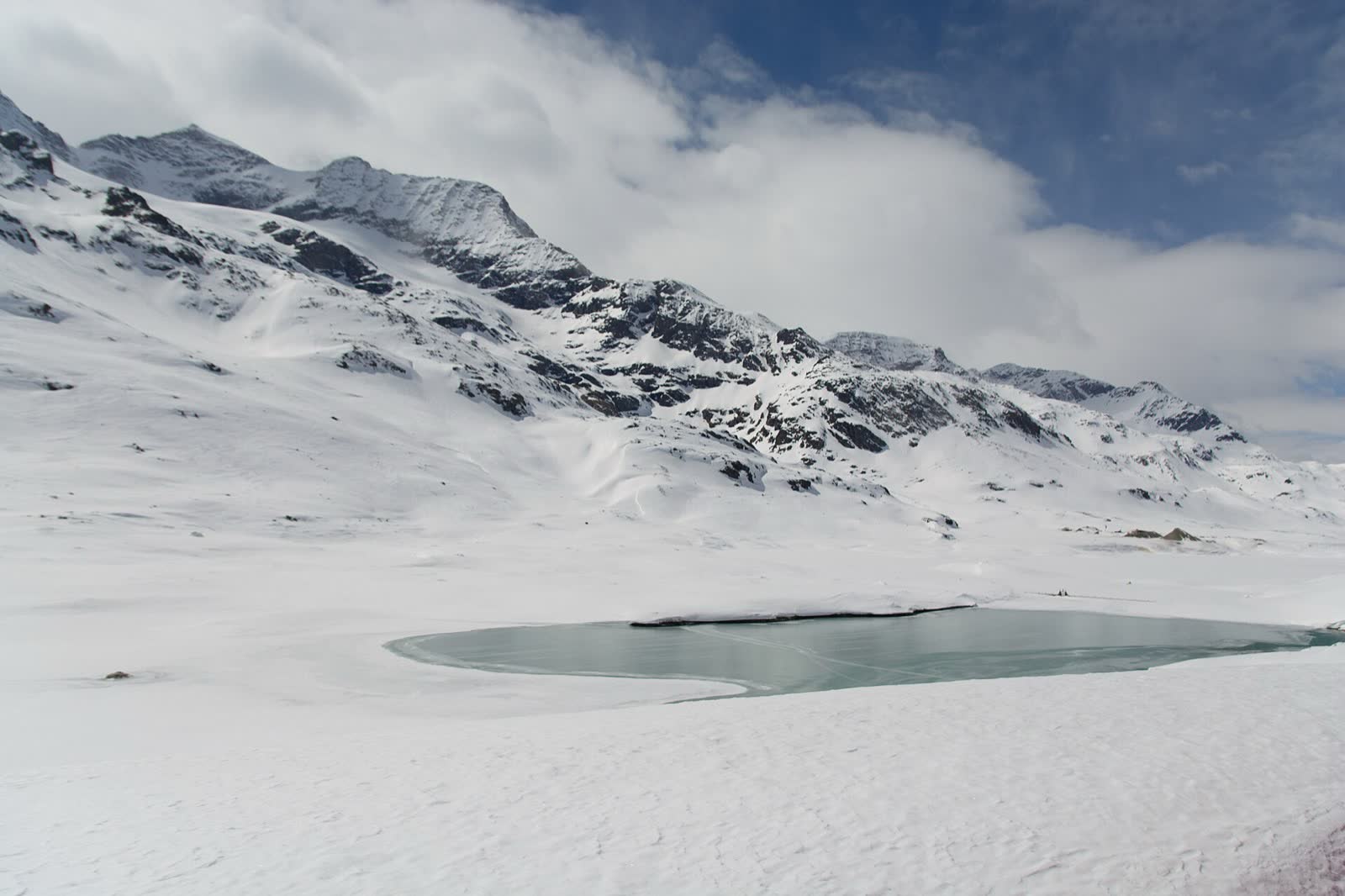
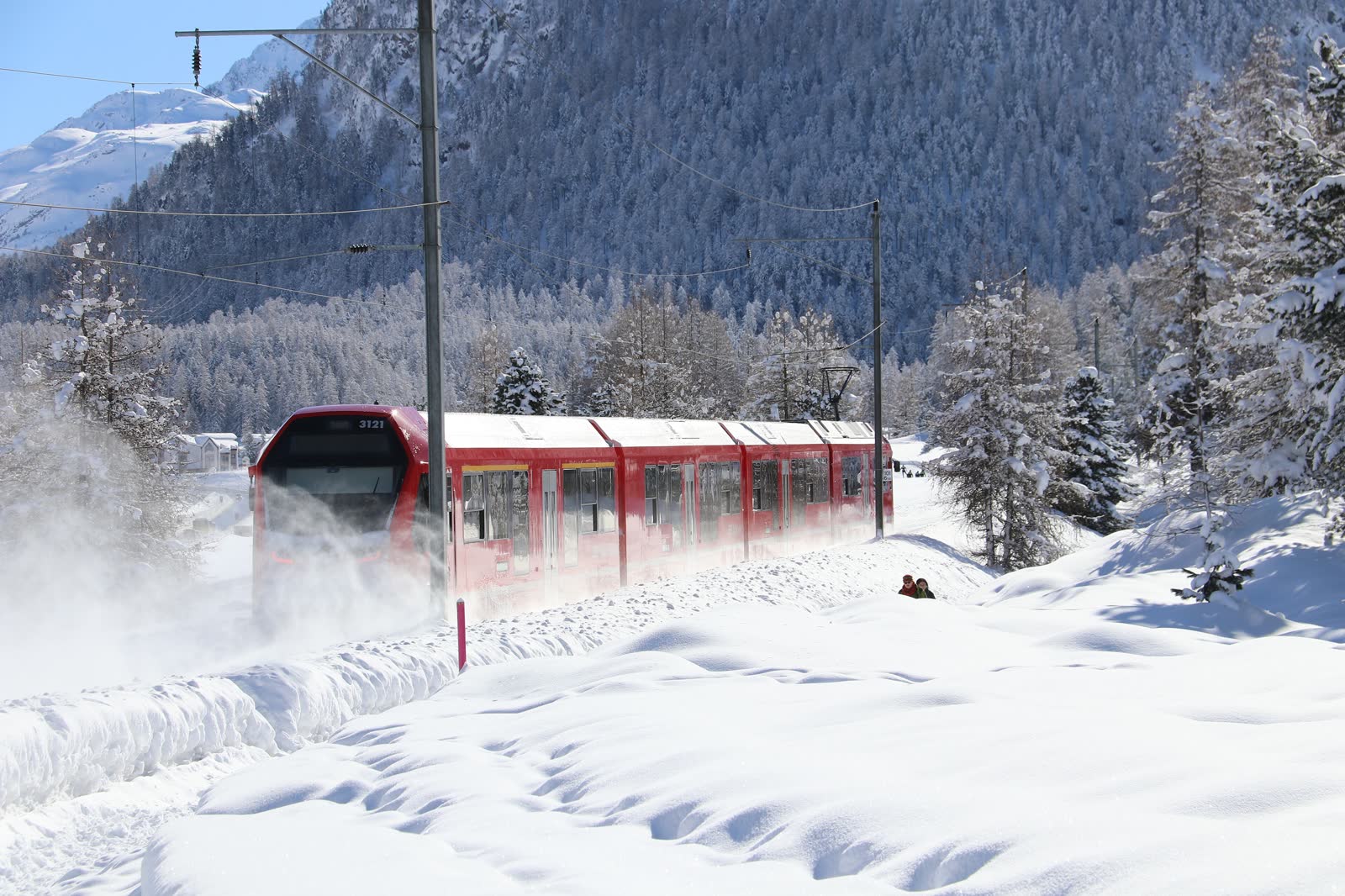
The best of the Bernina Express isn't summer: it's winter. The red train runs all year round and still climbs to 2,253 metres at Ospizio Bernina, between walls of snow taller than the windows, with frozen Lago Bianco alongside and white peaks as far as the eye can see.
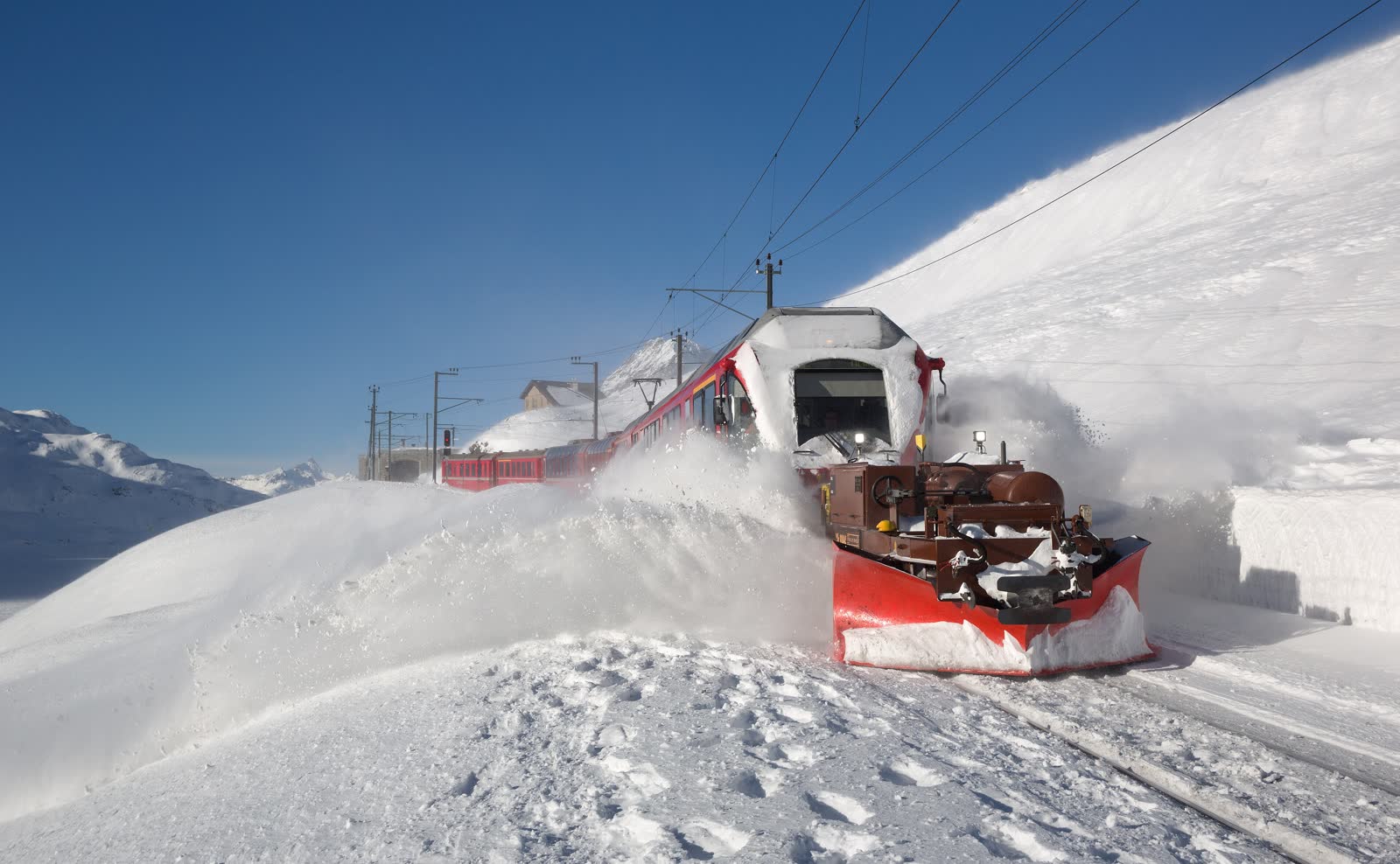
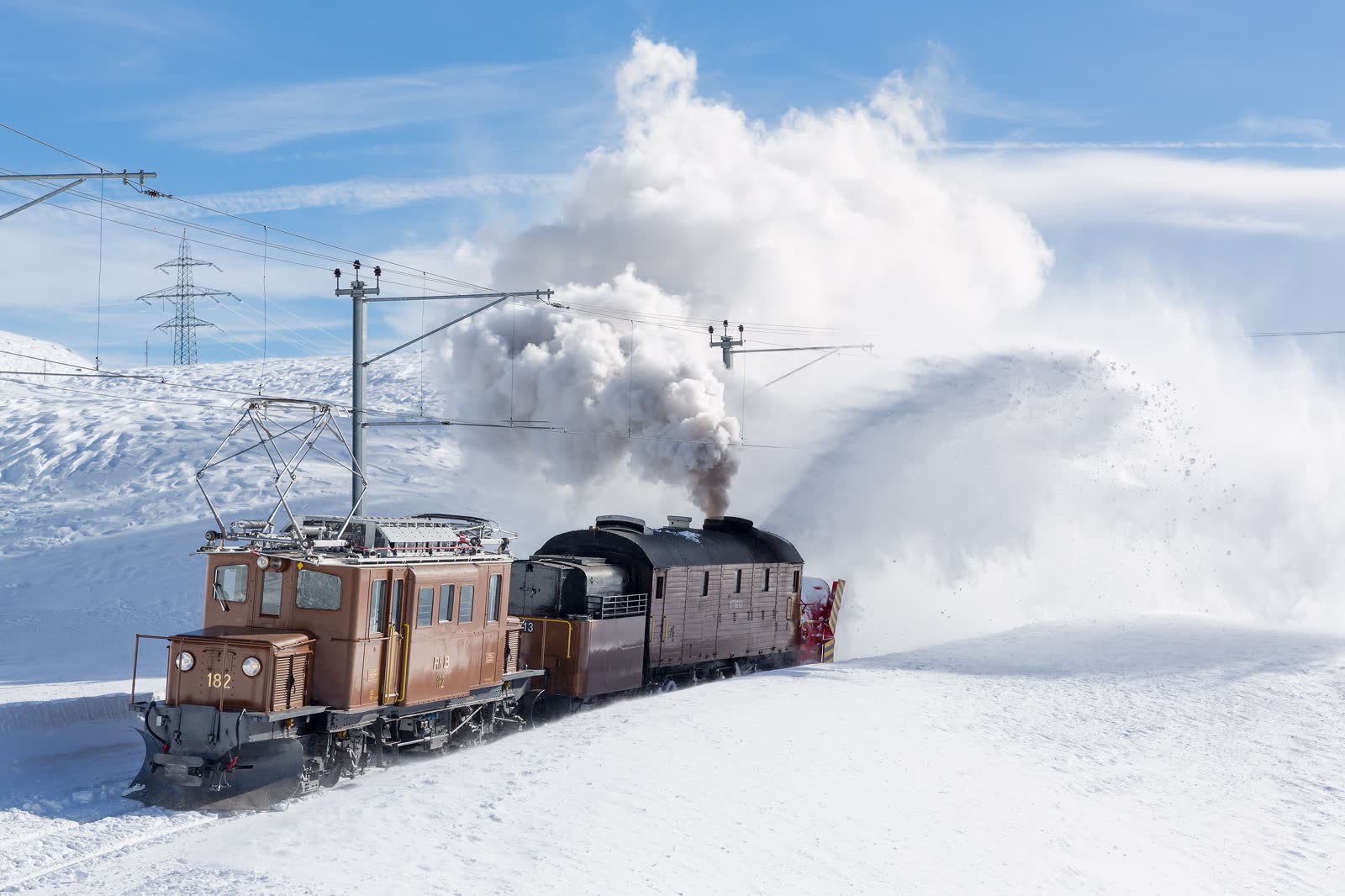
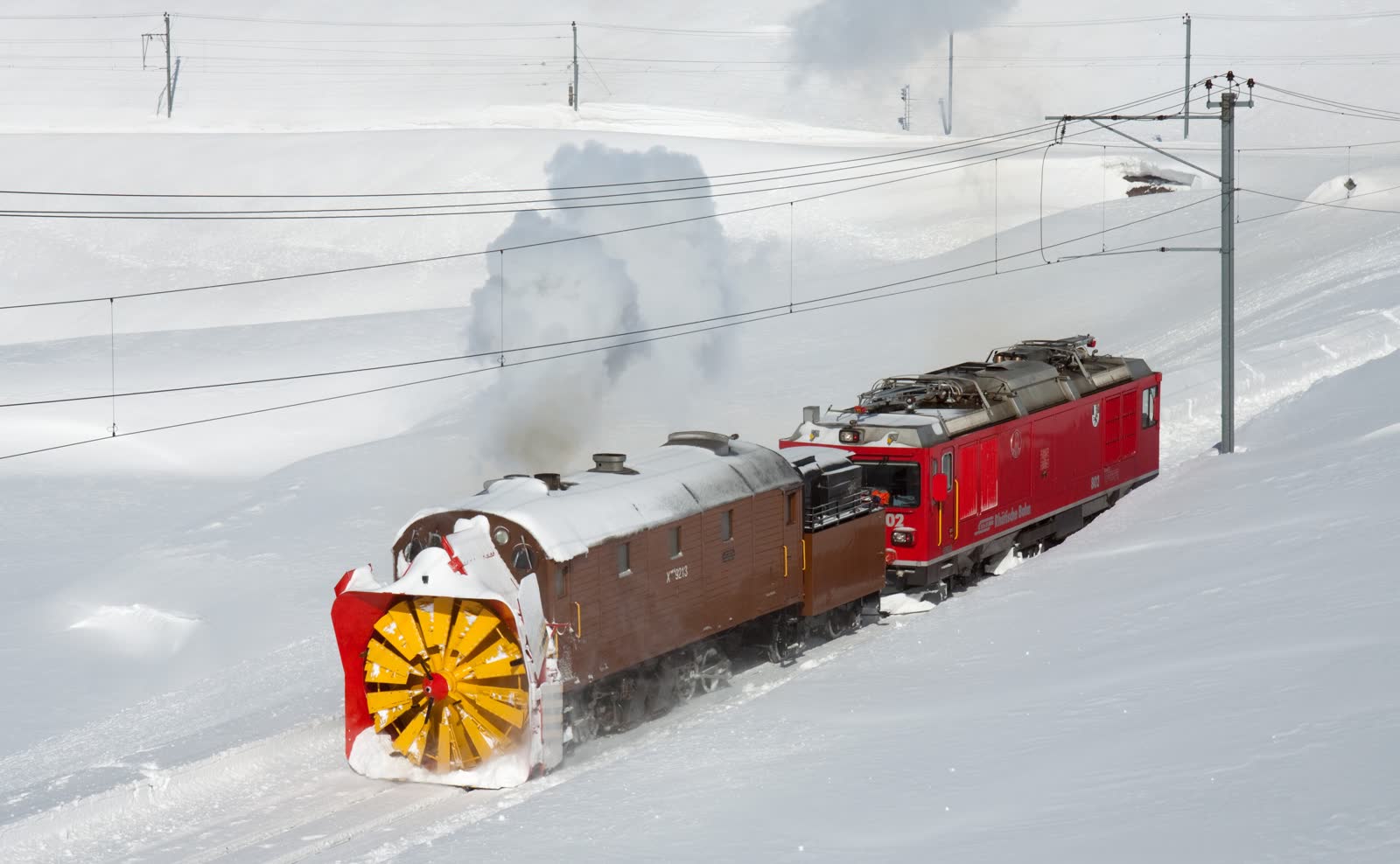
To make that possible, the line is cleared by rotary snowplows that throw up white clouds as they pass. On a few special winter days the historic steam snowplow still comes out, and it's quite a show.
- December to March: snow almost guaranteed up high
- Cheaper seat reservation in low season: CHF 40
- Best day: sunshine right after a snowfall
- Bring layers and sunglasses: the white is blinding
The towns where it's worth getting off
The Bernina Express doesn't let you get off and back on again: your seat is for one specific train. These towns are best enjoyed on the regional trains (I explain how further down).
To board, you need two separate purchases
This is where almost everyone gets confused. The Bernina Express isn't sold as a single ticket: there's the ticket on one side and the seat reservation on the other.
The train ticket
This is the regular Rhätische Bahn (RhB) ticket for the stretch you'll ride. It's the same ticket you'd use on a regional train on that line. If you have a Eurail / Interrail pass or a Swiss Travel Pass, this part is already covered.
The seat reservation
A mandatory supplement for riding the panoramic cars. It's not included in any pass. Ever. You always have to pay for it separately, and kids pay the full amount too.
May through October is high season and seats sell out. Reservations open months in advance, so if you already know your date, don't leave it for later.
2026 prices (in Swiss francs)
| Section | 2nd-class ticket | 1st-class ticket | Seat reservation |
|---|---|---|---|
| Chur – Tirano High season · May 2 – Oct 25 | 66 | 113 | 44 |
| Chur – Tirano Low season · from Oct 26 | 66 | 113 | 40 |
| St. Moritz – Tirano All year · ~2 h 15 | 33 | 57 | 32 |
| Bernina Express Bus Tirano – Lugano Optional, to continue into Italian-speaking Switzerland | — | 16–18 | |
Example: Chur–Tirano in 2nd class in summer = CHF 66 + 44 = CHF 110. With a Eurail pass or Swiss Travel Pass you only pay the CHF 44 reservation. The Swiss franc is worth a bit more than the euro. Reference prices from the RhB for 2026: always confirm them during checkout.
The same route, without paying for the reservation
Relax, there's an alternative. RhB regional trains run on the same line, roughly every hour. Same route, same viaducts, same Lago Bianco, no reservation and no supplement: you only pay for the regular ticket. Between Tirano and Chur you usually make one change, at St. Moritz or Samedan.
Bernina Express
- Panoramic windows all the way up to the roof
- Direct, no changes, ~4 h
- Guaranteed seat in a panoramic car
- Mandatory reservation: CHF 32–44
- You can't hop off in the towns and carry on
Regional trains
- Just the regular ticket, no supplement
- No reservation: you just hop on
- Get off in any town, wander around, take photos and catch the next one
- With a Eurail or Swiss Pass, it's free
- Ordinary windows, not panoramic
Go out on the Bernina Express, come back on the regionals
That way you get both versions of the trip and the best of each. Going out, the panoramic train: the big windows, the whole journey in one go, your first impression of the Alps with no interruptions. Coming back, the regionals: you hop off at Alp Grüm for a drink in front of the glacier, walk the Morteratsch trail, have lunch in Poschiavo and roll into Tirano in the early evening.
The two-day plan I'd put together: day 1, Tirano → Chur on the Bernina Express (sitting on the right), night in Chur or Bergün. Day 2, regionals back with stops in Bergün or Filisur (the Landwasser viewpoint is a short walk away), Pontresina and Alp Grüm, finishing in Poschiavo before heading down to Tirano.
Seven things worth knowing
Because of engineering works, Bernina Express trains 951 and 952 are rerouted through the Vereina tunnel (Chur – Landquart – Klosters – Pontresina). On those days they skip the Albula line and the Landwasser Viaduct. If the Landwasser is your dream shot, pick another date or ride that stretch on a regional.
Official links to book
Photo and map credits
Photos via Wikimedia Commons: Lago Bianco and Landwasser — Kabelleger / David Gubler (CC BY-SA 4.0 and 3.0); Brusio viaduct — Maxombrini (CC BY-SA 4.0); Lago Bianco from the train — Etsius (CC BY-SA 4.0); Landwasser in autumn — Aymeric Galan (CC BY-SA 4.0); Alp Grüm and Bergün — Leonhard Lenz (CC0); Ospizio Bernina — JoachimKohler-HB (CC BY-SA 4.0); Ospizio in winter and Lej Pitschen — Kabelleger / David Gubler (public domain); Morteratsch glacier — Daniel Schwen (CC BY-SA 2.5); Poschiavo — Franciop (CC BY-SA 3.0); Tirano — Maurizio Moro5153 (CC BY-SA 4.0); Pontresina — Adrian Michael (CC BY-SA 3.0); Filisur — Asurnipal (CC BY-SA 4.0); panoramic car — Markus Giger (CC BY-SA 4.0). Track alignment: © OpenStreetMap contributors (ODbL) via BRouter. Base maps: © OpenStreetMap, © Esri, © OpenTopoMap (CC BY-SA), Esri World Imagery. Winter photos: Kabelleger / David Gubler (CC BY-SA 3.0 and 4.0), GabrielleMerk (CC BY-SA 4.0), Martingarten (CC BY-SA 4.0), kuhnmi (CC BY 2.0), Markus Giger (CC BY-SA 4.0), via Wikimedia Commons; video stills by Gianluigi Brizzi and Oskar Gross (Pexels).